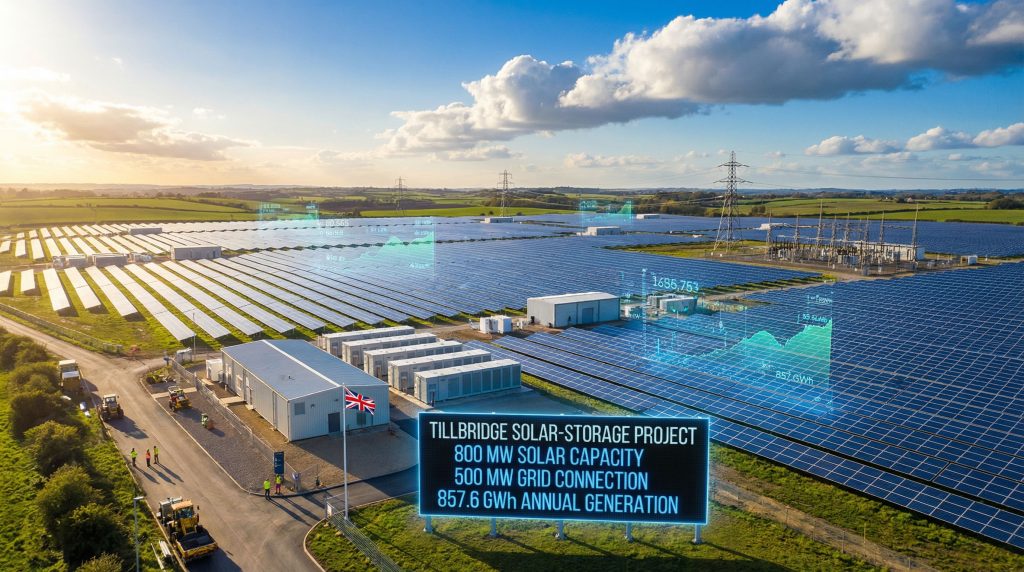
There is a growing disconnect between strong investor interest in UK solar and the barriers hindering rapid deployment.
Amid the UK’s recent surge in solar generation, investor sentiment remains positive. Confidence in the sector is strong, supported by the demand for clean energy and the clear role of solar in the UK’s energy mix, despite uncertainties around grid reform and political shifts. However, while capital is available, delivery is often constrained by insufficient grid infrastructure.
Grid connection delays are among the most significant obstacles for large-scale solar projects. Limited substation capacity and lengthy connection timelines continue to slow progress. Ongoing political uncertainty regarding the long-term direction of net zero policy beyond the current parliament adds further complexity for investors making long-term decisions.
Together, these factors are holding back deployment at a time when momentum should be building. This has created a widening gap between investor appetite and project delivery, with viable schemes ready to proceed but unable to do so at the necessary pace. The challenge now is achieving alignment across the system.
Adapting to delivery realities
While investor confidence is high, legacy challenges continue to impact delivery. Grid constraints, connection delays and planning complexities persist, even as capital is available and projects are ready to advance.
There are early signs that the system is beginning to adapt. The government is increasingly adopting a pragmatic, delivery-focused approach to infrastructure planning, particularly through the Development Consent Order (DCO) regime.
Historically, projects needed to resolve key details, such as grid connections, before consent was granted. While this provided certainty, it also caused delays when elements were outside a developer’s control. A more flexible model is now emerging, with growing recognition that certain aspects, especially grid connections, can be addressed post-consent without compromising the integrity of the scheme.
This shift reflects a broader move towards prioritising delivery, allowing projects to progress while maintaining necessary safeguards. For investors, this signals that the planning system is starting to respond to the realities of an evolving energy system.
A blueprint in practice
The recent Fenwick Solar Farm - a 237.5MW project in Doncaster - demonstrates this pragmatic approach in action. As the first energy DCO to be consented with grid connection options, it marks a clear departure from traditional models.
BOOM Power, the developer for Fenwick Solar, aims to connect the solar farm to a nearby overhead line via a line drop option. The DCO application also included a fallback grid connection option, featuring a 6.3km corridor to the National Grid Thorpe Marsh Substation.
The Environmental Statement and Planning Statement prepared by AECOM for Fenwick Solar assessed the environmental and social impacts and evaluated compliance with planning policy for both connection options. The Secretary of State granted consent for the project, retaining flexibility in the development consent, but stipulating that only one connection option could be delivered.
This decision allowed the developer to continue working with National Grid to determine the best post-consent connection strategy, avoiding project delays or forcing premature decisions that could add cost, time, or risk to delivery.
Other solar and energy projects have since built on the Fenwick Solar application, submitting proposals with connection options or without a completed regional substation for grid connection.
By keeping connection options open, this model acknowledges the dynamic nature of the electricity network and the need for flexibility as capacity evolves. It helps projects maintain momentum, reducing the risk of delay while ensuring robust and deliverable final connection solutions.
Fenwick Solar also highlights the importance of collaboration. Its progress has relied on close coordination between the developer, planning authorities, technical advisors and the grid operator. Rather than working sequentially, these stakeholders have collaborated to address challenges early and keep the project moving. This problem-solving approach is becoming essential as planning, infrastructure and delivery become more interconnected.
From constraint to coordination
Fenwick Solar shows that overcoming infrastructure barriers requires more than investment or policy change alone. It demands coordination across the entire system.
Grid capacity, planning frameworks and project development cannot be treated as separate challenges. Their effectiveness depends on how well they work together. Without sufficient grid capacity, projects cannot connect, and when planning systems do not reflect delivery realities, even strong projects can stall. A lack of coordination among stakeholders quickly leads to delays becoming the norm.
This theme is evident across the wider energy transition. In areas like storage and heat infrastructure, system-wide alignment often determines whether progress is made or delayed. The same principle now applies to large-scale solar.
Implications for investors
The message for infrastructure investors is clear. The fundamentals of the UK solar market remain strong. Demand for clean electricity is rising, driven by electrification in transport, heat and industry, while solar remains one of the most cost-effective new generation options.
However, the path to delivery is changing. Understanding how projects navigate grid constraints, engage with the planning system and align with broader infrastructure considerations is increasingly important. Projects that demonstrate flexibility, strong stakeholder coordination and a clear route through these challenges are more likely to progress quickly.
This also places greater emphasis on the capabilities of development teams and partners. Those who can operate effectively in this dynamic, collaborative environment will be best positioned to unlock value and deliver successful projects.
Turning momentum into delivery
The UK solar sector is at a pivotal point. Investor confidence is high and the project pipeline is growing. Yet, without addressing the infrastructure and coordination challenges behind delivery, there is a risk that momentum will slow at a critical time.
The emerging approach through the DCO regime, and the example set by Fenwick Solar, offers a way forward. By embracing flexibility, fostering collaboration and maintaining a focus on delivery, it is possible to unlock stalled projects and accelerate progress without sacrificing robustness or oversight.
This model provides a blueprint for how government, developers and investors can work together to deliver solar at scale. It demonstrates what can be achieved when policy, planning and project teams align around a shared goal.





.svg)