
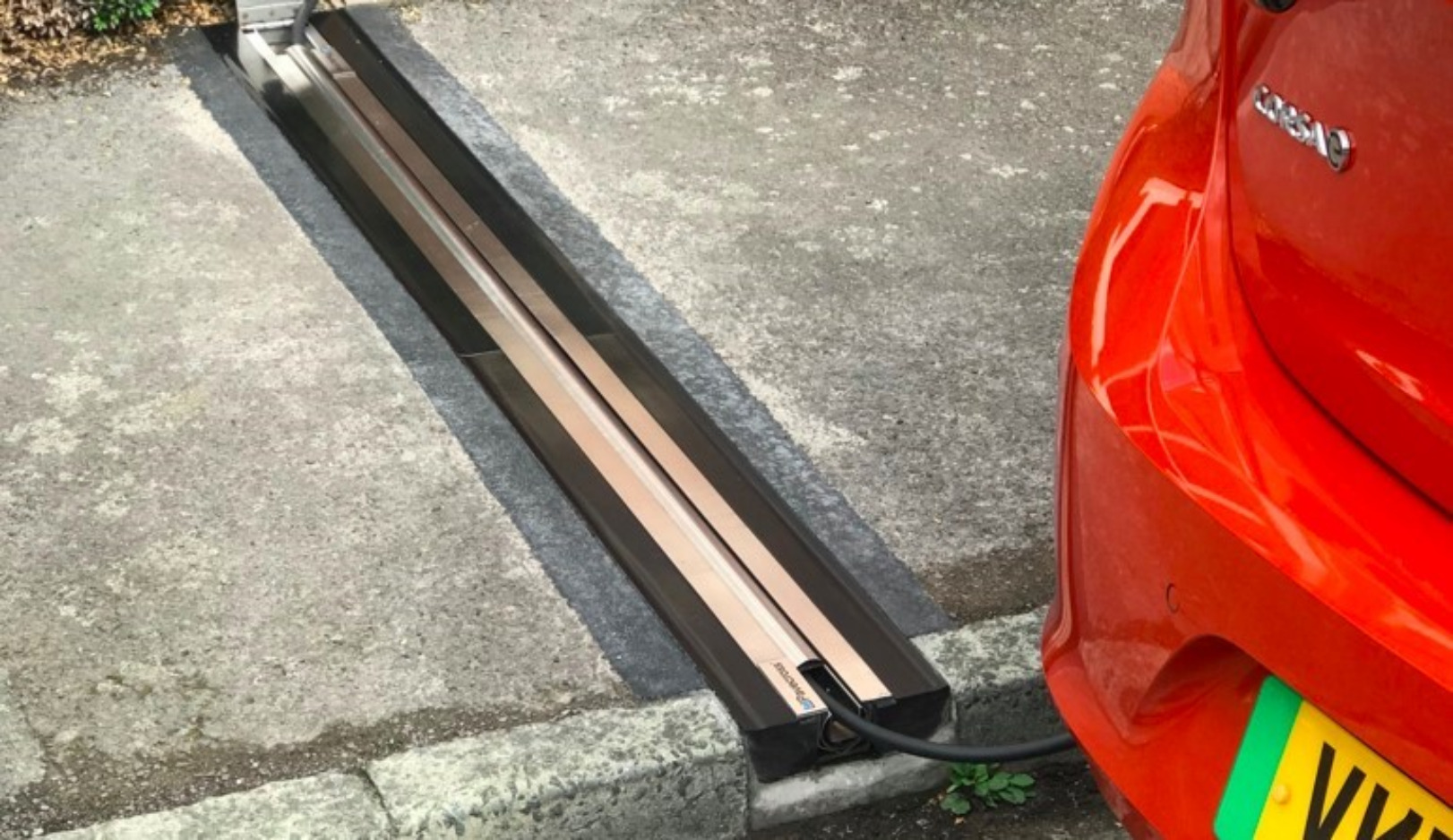
The UK government is consulting on easing planning conditions for charging gullies, following a £25 million ($33.5 million) commitment to local authorities to fund cross-pavement charging solutions.
Newly published plans aim to make home EV charging more accessible for drivers without private driveways and for renters. The proposals would require chargepoints in all new covered carparks, and the government is considering removing the need for planning permission to install cross-pavement charging gullies.
These changes would give more EV drivers access to domestic electricity rates, which are typically lower than public charging costs. Public chargepoint operators must set higher prices due to standing charges and profitability requirements, making domestic charging more competitive.
The EV infrastructure industry has long called for an end to the so-called ‘pavement tax’, which sees VAT on public charging set at 20%, compared to just 5% for private charging.
Vicky Read, chief executive of ChargeUK, responded to the announcement by stating, "Any measure which makes it easier for drivers to make the switch to electric is positive. But to make the transition to electric vehicles truly fair, we need easily available and affordable charging at home, at work, and in public, including on-street, en-route, and destination locations. The public and private networks must work together to support all drivers. This means creating a supportive investment environment for public charge points, removing barriers to deployment, and addressing cost inequalities, including standing charges and VAT."
The consultation on planning conditions follows the government’s funding to help more people without driveways charge their vehicles at home affordably. If planning requirements are relaxed, drivers could save up to £250 in application fees.
The government will also collaborate with Ofgem to ensure public costs remain fair and to strengthen protections against landlords overcharging tenants for home charging.
This announcement comes after a year of significant UK legislation, including the introduction of the Electric Car Grant to subsidise new EVs, as the 2030 ban on petrol and diesel vehicles approaches.


.svg)